A Thoughtful Second Use for Glass Jars
A glass jar reset helps you choose sound, useful jars for dry-goods storage, match lids carefully and pass on extras before they become clutter.
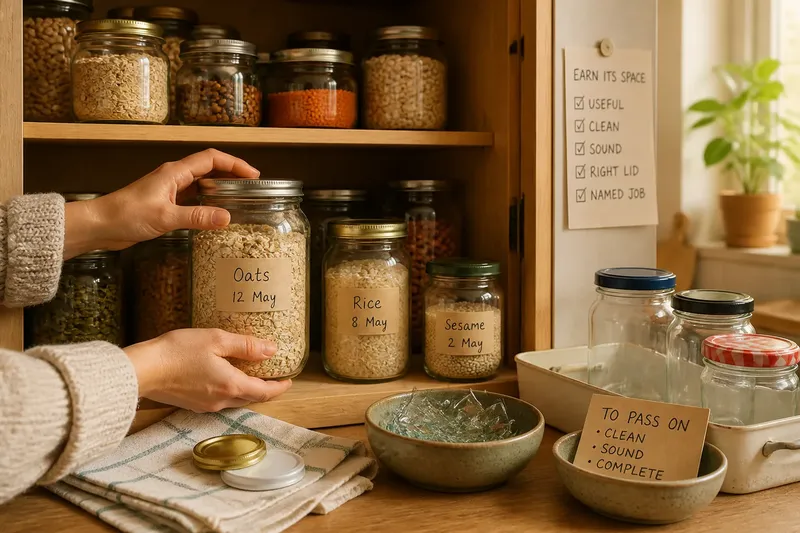
A glass jar reset works best when you decide what your kitchen cupboard needs before choosing which jars to keep. Set aside a short stretch of time at a seasonal change, gather the jars already in use, and keep only clean, sound containers that suit a real storage job. The aim is useful reuse, not a growing collection of attractive empties.
Which jars are worth keeping for dry goods?
Keep jars that are intact, easy to clean and comfortable to use for something you regularly store. A jar can be clear, plain or oddly shaped; its value lies in whether it makes a cupboard easier to use.
Inspect the glass in good light. Look for cracks, chips around the rim, sharp edges, cloudy residue that remains after washing, or damage near the base. Check the mouth and the area where a lid sits, since a compromised edge can make a jar awkward to close and handle. Put damaged jars aside for appropriate disposal rather than trying to repurpose them as food containers.
Next, think about access. A wide mouth is convenient for scooping oats, rice or flour. A narrower opening may suit pouring lentils or seeds, but can make refilling and cleaning more fiddly. Consider where the jar will sit: a tall container may fit a shelf but collide with the cupboard above, while a squat one may be easier to reach at the back of a deep shelf.
- Keep: sound jars that fit an actual shelf and a food you buy.
- Keep selectively: unusual shapes that solve a specific storage problem.
- Let go: jars with chips, cracks, persistent odours or no plausible cupboard role.
How should you match jars to dry foods?
Match the container to how you use the ingredient, rather than trying to make every jar look uniform. A household that cooks with rice often may benefit from a roomy, wide-mouth jar; a small quantity of sesame seeds may need only a compact container. Leave enough space to retrieve food neatly and to refill without spilling.
Before transferring food, make sure the jar is thoroughly clean and dry. A trace of water can make dry ingredients clump, and old crumbs or residue can affect the next contents. If the jar previously held something with a strong smell, such as pickles or coffee, wash it carefully and check whether the odour remains. Do not use it for a delicate ingredient if the smell persists.
A clear jar lets you see what is inside, but it does not identify the contents or tell you when you opened the packet. Add a removable label with the ingredient name, and, where useful, note the date you filled it or the preparation instructions from its packaging. Keep the original packet nearby if you need its ingredient details or handling information.
Imagine you buy oats regularly, but keep several empty sauce jars because their shapes appeal to you. You could choose one wide-mouth jar that fits the shelf and holds the oats you use between shops, label it, and pass on the remaining sound jars. The cupboard would then make the everyday ingredient easier to find, while the surplus would stop occupying space without a purpose.
What should you check about lids?
Keep a lid only when it fits its jar securely and is clean, intact and practical for the intended use. A lid that seems close in size may still cross-thread, wobble or fail to sit flat. Test the pairing gently without forcing it, and keep matched sets together rather than storing a box of unpaired lids.
Inspect the inside surface and any seal or lining. Rust, peeling coatings, a distorted edge or a damaged seal are reasons to stop using that lid for food storage. A lid that closes loosely can also let cupboard dust or moisture reach dry goods, so choose a different jar-and-lid pairing rather than relying on appearance.
Different jars and closures are made for different purposes. Follow the jar or lid maker’s instructions and any applicable local food-safety guidance when deciding how to use a container, particularly if you intend to preserve food rather than store dry goods.
How can a seasonal cupboard reset stay small?
Start with the cupboard, not a search for more jars. Take out the containers already being used and notice which ones are awkward to reach, hard to refill or far larger than their contents. Then make room for the dry goods you actually keep, leaving a little practical space for handling and cleaning.
Use a simple limit: each jar you keep should have a named job, and spare capacity should be modest. You might reserve one clean, sound spare if a jar in active use breaks or a regular purchase needs another container. If you cannot name a likely use for an empty jar, it is not a useful reserve just because it might come in handy someday.
During the reset, sort jars into three groups:
- In use: clean, labelled jars holding ingredients you regularly reach for.
- Ready to use: a small number of sound jars with matching lids and a clear place in the cupboard.
- Leaving: damaged jars, unwanted extras and jars that do not suit your storage needs.
Wash and dry the jars you are keeping before returning them to the cupboard. Put frequently used ingredients where they are easy to reach, and keep labels facing forward if that helps you distinguish similar foods. A jar should earn its space through use, not by being arranged as a display.
Where can unwanted jars go?
Offer sound, clean jars to someone who can use them, or check whether a local community pantry, reuse group or charity shop accepts them. Ask before dropping them off: organisations may have limited storage or may not accept containers without lids. Group matched jars together and make their condition clear.
If a jar is damaged, do not pass it on as a food container. Follow your local council’s glass and broken-glass disposal guidance, since collection rules differ by area. Wrap or contain broken pieces safely according to those instructions, and keep them away from household recycling if the local service says not to include them.
For sound jars that have no suitable recipient, check local recycling guidance. Empty and clean them as directed, and separate lids if the collection service requires it. Reuse is useful when it sends a container to a clear next purpose; keeping every jar indefinitely merely moves the clutter from one cupboard to another.
What should you do when a jar does not suit food storage?
Do not force a poor fit. A narrow neck may make a jar difficult to clean, a lid may not close properly, or the shape may waste shelf space. If the glass is sound, consider another specific household use only if you already need it and can keep the jar clean and safe for that purpose.
For example, a small jar might hold drawing pins in a craft drawer if its opening is easy to access and the container will not be mistaken for food. A larger jar could gather loose string in a utility cupboard if it fits the space and does not become a reason to retain more jars. These are alternatives, not automatic assignments; if they solve no real problem, pass the jar on or recycle it appropriately.
Which questions help settle a doubtful jar?
Can I reuse a jar that has held sauce?
Yes, if the glass is sound and it can be cleaned thoroughly, dried fully and checked for lingering odour. Choose a dry ingredient that will not take on any remaining smell, and use a suitable, matching lid.
Should I keep a jar without its original lid?
Keep it for food storage only if you have a properly fitting, intact lid that is suitable for the jar. Otherwise, consider a clear non-food use only when it meets a specific need, or let it go.
Is a chipped rim safe to keep?
No: a chip can leave a sharp edge and compromise the jar’s fit with its lid. Set it aside from food use and follow local guidance for its disposal.
How many spare jars should I keep?
Keep only the spare containers you can store neatly and plausibly use for ingredients you buy. If your cupboard already has empty jars waiting without a job, let those go before adding more.
A thoughtful glass jar reset leaves you with a small, useful set: clean containers matched to familiar dry goods, lids that fit, and space to reach what you cook with. When the next seasonal sort arrives, use that same practical test for each empty jar: name its job, check its condition, then decide where it belongs.