Why Paper Fibres Hold a Fold
Why paper fibres hold a fold depends on their network and direction. Learn how grain affects bending, creasing and the way a sheet stays shaped.
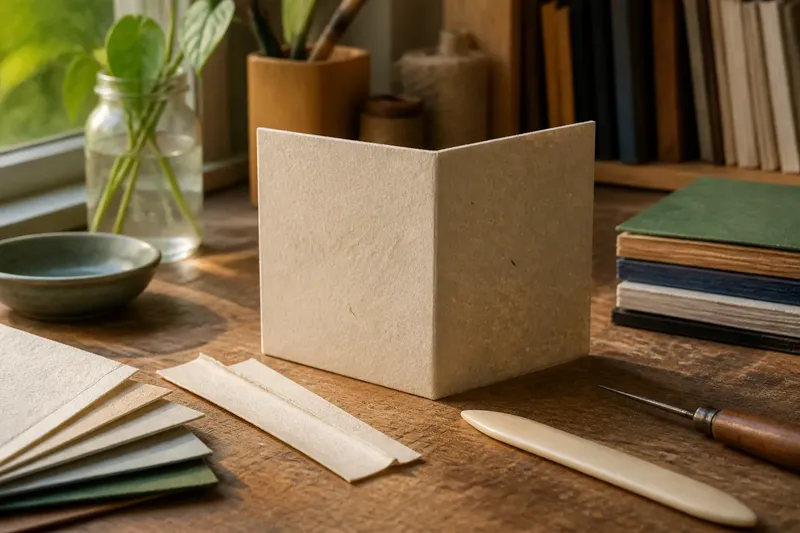
Why paper fibres hold a fold becomes clear when you bend a sheet slowly: the paper curves first, then a sharp crease forms where pressure concentrates. That change comes from a web of plant fibres, not from a hidden hinge. The fibres’ arrangement across the sheet also influences which way the bend feels easier.
What happens inside a crease?
Most everyday paper is made from cellulose fibres dispersed in water, gathered into a thin sheet and dried. As the water drains, fibres overlap and bond at many contact points. The resulting network is strong in several directions, but it is not a uniform block.
A gentle bend spreads strain across a broad area. Press more firmly along one line and the network is compressed on the inside of the bend and stretched on the outside. Some fibres shift, flatten or break; others remain joined around them. This local change makes a crease, and the altered structure helps the sheet keep that shape.
Paper does not have a single, clean fold line like a scored piece of card. A crease is a narrow zone where the fibre network has been rearranged. Its crispness depends on the paper’s thickness, stiffness, surface treatment and moisture as well as on how the fold was made.
Why does grain change the bend?
As paper forms on a moving screen, many fibres tend to settle in the direction of travel. This predominant orientation is called the grain. It is a tendency rather than a set of perfectly parallel threads: fibres still cross and overlap in other directions.
Folding with the grain often feels smoother and produces a neater crease. Folding across it can take more effort and may leave a rougher line, especially in heavier paper or card. The difference is useful in bookbinding, print finishing and paper craft, where a fold may need to look clean or open repeatedly.
To feel the grain, take a spare sheet of the same paper and gently curve it one way, then turn it a quarter-turn and curve it again. Compare how readily each curve forms and how much the sheet resists. Avoid making hard creases if you need the sheet intact; a light curve is enough to sense a difference.
How can you find the grain without damaging a sheet?
Try the gentle-bend check on a sample before committing a cover, invitation or model part. If the paper is too valuable to crease, compare the way it curls when held loosely in each direction. The easier curve usually follows the grain, though coatings, unusual fibre blends and very light papers can make the result less obvious.
Paper suppliers may identify grain as long grain or short grain, describing its direction relative to the sheet’s longer dimension. For a folded booklet, grain running parallel to the spine generally helps the pages open and close without fighting the fold. For a single card, choose the orientation that gives the cleanest line and suits the layout.
What changes how a fold behaves?
- Thickness: A thicker sheet has more material to compress at the fold, so a blunt crease can buckle or crack the surface.
- Coating: A coated or heavily printed surface may split when bent sharply, even if the fibres underneath remain connected.
- Moisture: Damp paper often bends more readily, but it can also distort as it dries. Keep finished work away from wet surfaces and sudden changes in humidity.
- Pressure: A bone folder or the back of a spoon can smooth a crease on suitable paper. Use light, even pressure and test on an offcut to avoid polishing or marking the surface.
- Fold preparation: For thick card, a scoring tool can compress a narrow line before folding, helping the sheet bend in a controlled place. Match the tool and pressure to the card; an overly deep score can cut fibres rather than guide them.
Say you are making a small paper cover from a stiff sheet and the first fold springs open with a ragged edge. Imagine checking an offcut, finding that one direction curves more easily, and turning the cover so its fold follows that direction. A light score on the offcut can help you choose suitable pressure; the expected result is a cleaner bend that sits closer to the shape you intended.
Which paper-fold questions come up often?
Why does paper spring open after folding?
The uncreased areas retain some stiffness and push back against the bend. A firmer crease can help, but very thick or coated paper may need a score or a design that does not rely on the fold staying tightly shut.
Why does a crease look white or cracked?
A sharp bend can separate or disturb the surface layer, making the line appear pale. This is more noticeable on coated, dark-coloured or printed stock, so test the fold direction and scoring method on a spare piece.
Does recycled paper fold differently?
It can, but the word “recycled” alone does not tell you how it will behave. Fibre mix, sheet formation, thickness and surface finish all affect the feel of a fold; handle a sample of the actual stock when appearance matters.
Can an old crease be removed?
Usually not completely, because the fibre network has already been changed along the line. You may flatten it gently beneath a clean, dry weight, but the crease can remain visible and adding moisture may warp the sheet.
How should you choose a fold for a finished object?
Start with the job the fold must do. A display card may need one clean bend; a booklet spine must open without tearing; an origami model depends on folds that stay sharp and repeatable. Choose paper with a suitable thickness and surface, then orient the grain to support that use.
When the stock is unfamiliar, make a small mock-up from an offcut. Check the direction of easiest bending, try a light crease, and inspect the surface under ordinary room light. This simple material check can save the finished sheet from a ragged edge, and it turns why paper fibres hold a fold into a practical decision about grain, pressure and paper choice.